
High-Security Sites: Why Single Detection Technology Is Rarely Enough
The Challenges of Intrusion Detection in High-Security Sites
High-security sites such as data centers, power plants, and airports require highly reliable intrusion detection systems.
To protect critical assets, these facilities typically implement a multi-layered security strategy that includes perimeter protection, open-area monitoring, building protection, and critical asset protection.
There are many types of intrusion detection technologies available, and each is suited to a different layer of protection. At the same time, every technology has its own strengths and limitations.
In some applications, a single technology may provide sufficient protection. However, in sites with higher security requirements, multiple technologies are often combined to reduce the risk of missed detections and improve overall system reliability.
In this article, we will review some of the most common intrusion detection technologies used in high-security facilities and explore how combining multiple technologies can improve detection reliability.
Different Detection Technologies Have Different Strengths
A wide range of intrusion detection technologies are used in high-security facilities.
For example, in Perimeter Intrusion Detection Systems (PIDS), commonly used technologies include fiber optic sensors, active infrared beam sensors, LiDAR sensors, radar sensors, and AI cameras.
While all of these technologies are designed for real-time intrusion detection, each has different characteristics, strengths, and limitations.
Note: When evaluating an intrusion detection system, false alarm rates are just as important as detection rate. Each technology has environmental and installation considerations, and effective system design requires a balance between detection reliability and operational efficiency.
| Technology | Typical Applications | Key Characteristics | Considerations When Used Alone |
|---|---|---|---|
| Fiber Optic Sensor (Fence-Mounted) | Long-distance fence protection | Detects physical attacks such as fence climbing and cutting across long perimeter fences | May not detect intrusion methods that do not create sufficient changes or disturbances on the fence itself |
| Active Infrared Beam Sensor | Linear perimeter protection | Relatively simple solution for protecting long boundaries | Complex or curved perimeters may require additional devices and installation points |
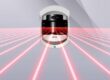
| 2D LiDAR Sensor | High-precision protection of gates, entrances, building perimeters, and open areas | Creates virtual fences and some models are customizable detection zones with accurate intrusion detection | Protecting very large sites may require multiple sensors |
| Radar | Wide-area surveillance | Detects approaching people or vehicles over long distances | Often combined with other technologies when detailed protection of specific areas is required |
| AI Camera | Video verification and object classification | Provides both intrusion detection and visual situational awareness | Performance may be affected by visibility limitations such as obstacles, lighting conditions, or poor visibility environments |
Cases Where a Single Technology May Not Be Enough
As discussed in the previous section, different intrusion detection technologies are suited to different applications. However, there are situations where a single technology alone may not provide sufficient protection.
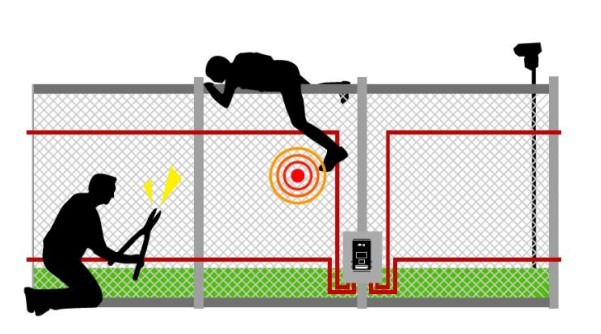
● Example 1: Intrusions That Do Not Create Changes on the Fence
Fence-mounted fiber optic sensors are highly effective at detecting physical attacks such as fence climbing and cutting because they detect vibrations and disturbances on the fence itself.
However, if an intrusion does not generate sufficient vibration or disturbance on the fence, an additional detection method may be required.
● Example 2: Cases Where Video Alone Is Not Enough
AI cameras are highly effective for visual verification and situational awareness. However, their detection capability depends on the ability to visually identify a target.
In outdoor environments, factors such as changing weather conditions, lighting variations, moving shadows, vegetation movement, blind spots, and resolution limitations caused by distance can all affect video performance. As a result, there are situations where cameras alone may not provide sufficient intrusion detection.
Combining Technologies to Improve Detection Reliability
In high-security environments, combining different technologies can help address detection gaps that may be difficult to cover with a single solution.
Since each technology has its own strengths and limitations, many high-security facilities improve detection reliability by combining complementary technologies rather than relying on a single solution.
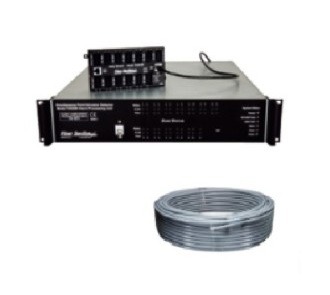
● Example 1: Fiber Optic Sensors + Active Infrared Beam Sensors
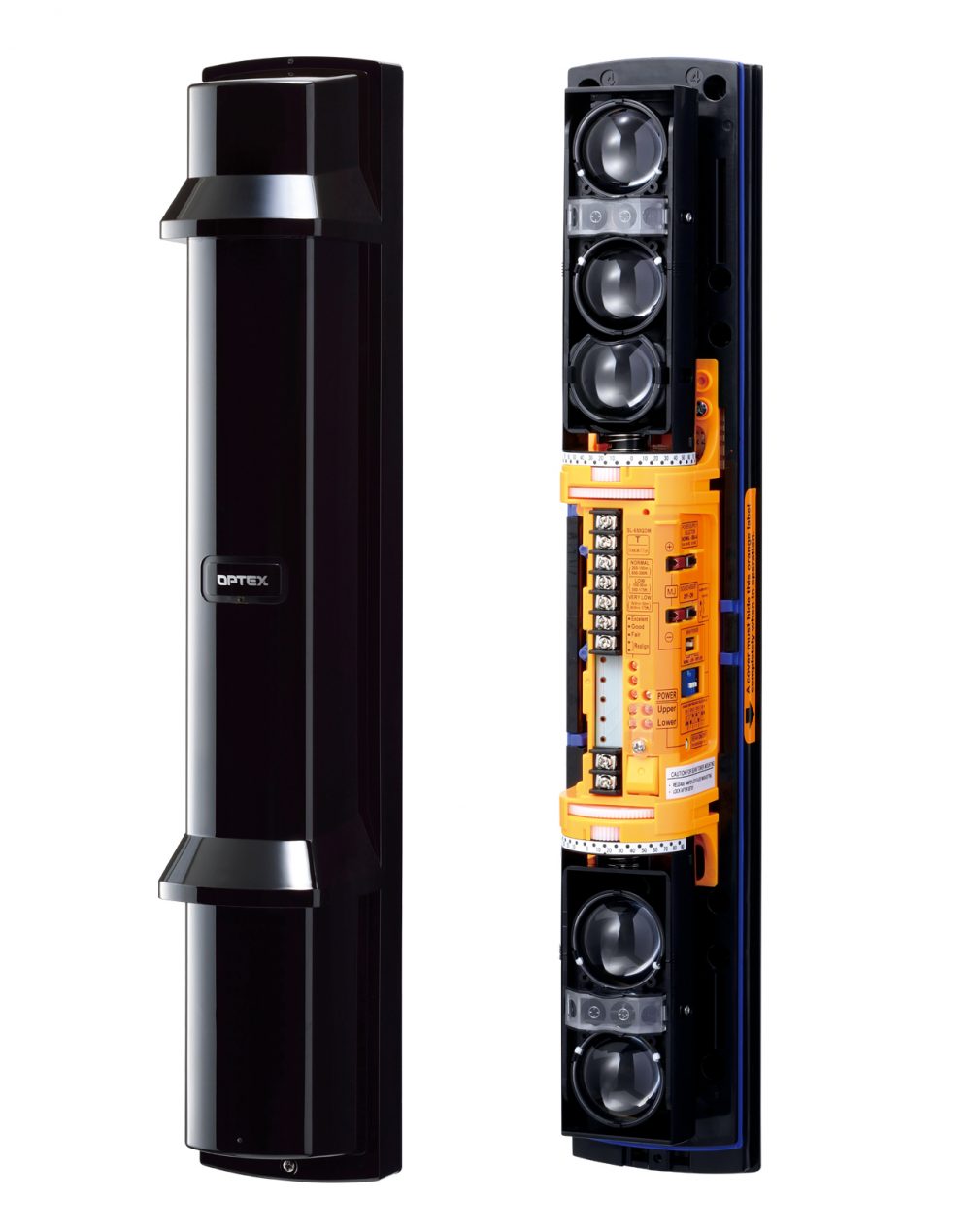
The combination of fiber optic sensors and active infrared beam sensors is one approach used in high-security facilities.
Fiber optic sensors are highly effective for protecting long perimeter fences. However, depending on the intrusion method, there may be situations where insufficient vibration or disturbance is generated on the fence, making detection more challenging. Because fiber optic sensors and active infrared beam sensors rely on different detection principles, they can complement each other by helping to detect intrusion scenarios that might otherwise be missed by a single technology.
OPTEX’s SL-QDP/QDM Series supports four selectable beam frequencies (4 channels), helping to prevent interference when multiple beam sensors are installed in a line or in stacked configurations.
As a result, it is easier to design scalable perimeter protection systems for sites with long perimeters or complex layouts.
For more information, please visit the SL Series product page.
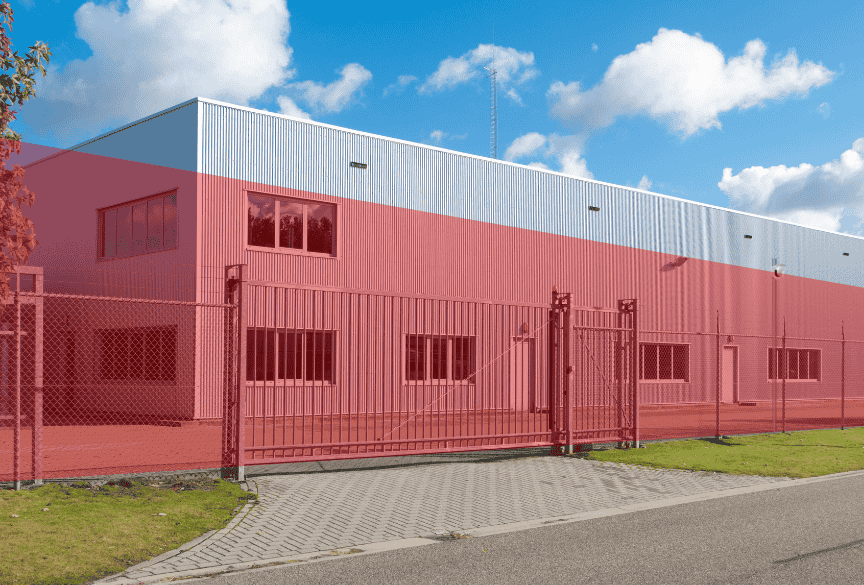
● Example 2: Fiber Optic Sensors + 2D LiDAR Sensor
Another approach is to combine fiber optic sensors with 2D LiDAR technology.
By adding a laser wall created by a 2D LiDAR sensor, it is possible to introduce an additional layer of protection based on a different detection principle. This helps improve detection reliability and reduce the risk of missed detections.
The OPTEX REDSCAN Pro (RLS-50100V) is a 2D LiDAR sensor capable of creating a laser wall of up to 100 m. It also allows the detection area to be divided into up to eight independent zones, providing flexible configuration for different site requirements.
For more information, please visit the RLS-50100V product page.
Example 3: Sensors + VMS + Cameras
In high-security facilities, detecting an intrusion is only part of the security process. Equally important is the ability to quickly and accurately assess the situation when an alarm is triggered.
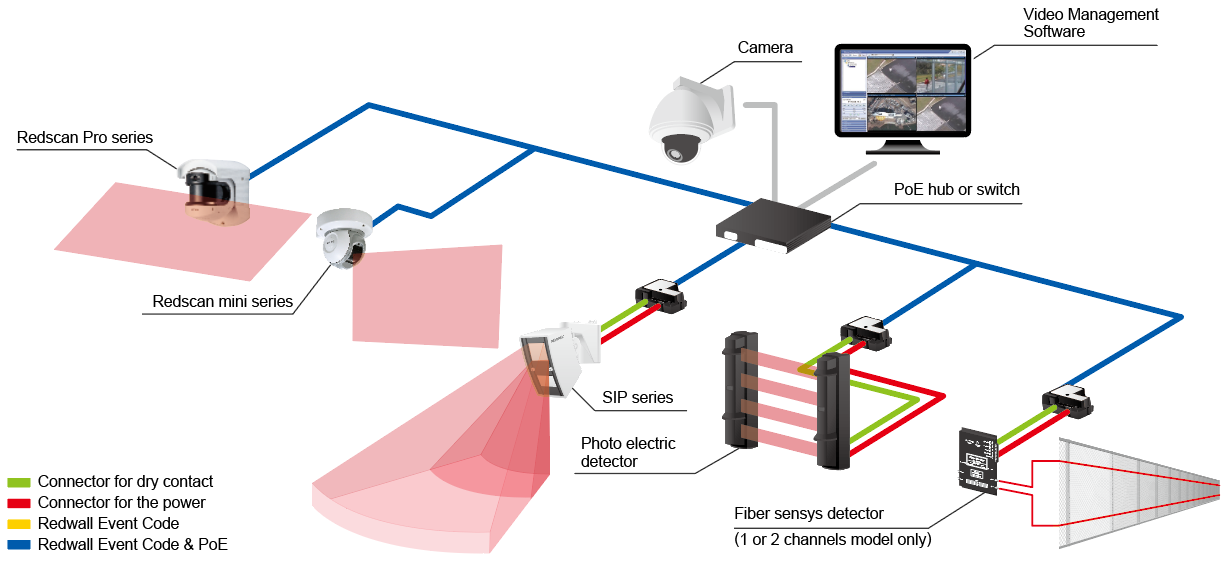
For example, OPTEX’s REDSCAN Series LiDAR sensors can be integrated with a Video Management System (VMS) through protocols such as ONVIF. When an intrusion is detected, the associated camera feed can be automatically displayed in the control room.
This enables operators to view alarm information and live video simultaneously, allowing them to assess the situation more quickly. This approach is commonly known as Visual Verification, helping reduce unnecessary dispatches and enabling faster response decisions.
In nighttime environments, camera performance can be further enhanced by adding supplemental camera illumination to improve video visibility and verification capabilities.
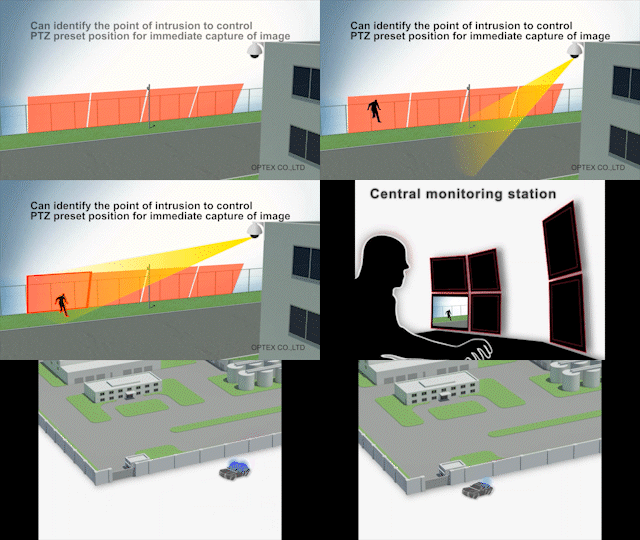
As a result, high-security facilities are often designed not around individual sensors, but around an integrated workflow of:
Detection → Video Verification → Response
This system-level approach helps create a more practical and effective intrusion detection solution.
For more information about OPTEX sensor and VMS integration solutions, please see the page: VMS Integration with security sensors.
Conclusion
In high-security facilities, there are situations where a single intrusion detection technology may not provide sufficient protection, depending on the size of the site and the importance of the assets being protected.
For this reason, different technologies are often combined to improve detection reliability and reduce the risk of missed intrusions. At the same time, successful security systems must consider not only detection performance, but also false alarm rates and operational efficiency.
OPTEX provides intrusion detection solutions tailored to the specific requirements of each facility.
If you are planning an intrusion detection system for a high-security site, please feel free to contact OPTEX for more information.
Contact OPTEX
Please feel free to contact us for further information.
We are always eager to support you and propose a solution that suits your needs.