

Why Adding More CCTV Cameras Does Not Always Improve Security
Security Challenges That Cannot Be Solved by Simply Adding More Cameras
Surveillance cameras are an essential component of modern security systems and are widely used across Southeast Asia, from residential properties to high-security facilities.
Being able to visually monitor conditions inside and outside a facility plays an important role in recording and reviewing incidents such as intrusion, theft, and suspicious activity.
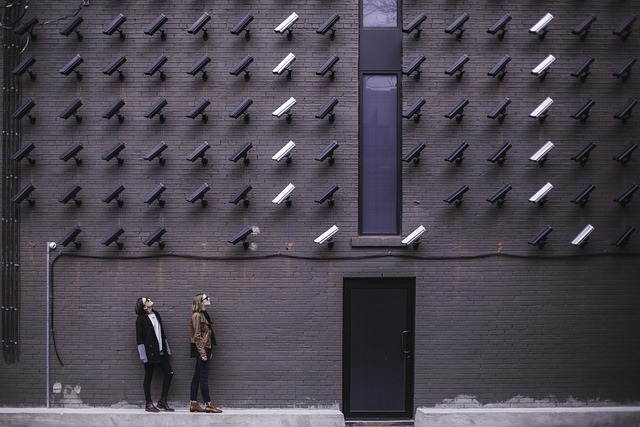
However, when considering ways to strengthen security, it is not uncommon to assume that simply adding more cameras will solve the problem. In real-world environments, however, increasing the number of cameras does not necessarily lead to reduced intrusion risk or improved response capability.
What matters is not the number of cameras, but the overall system design: which risks should be detected, at what stage, how they should be detected, and who should respond.
Limitations of Cameras Used Mainly for Recording and Live Monitoring
Cameras used mainly for recording and live monitoring, including traditional CCTV systems, are effective tools for capturing video footage and checking the situation when needed. However, this type of camera is essentially a device for viewing images, and detecting abnormalities requires monitoring by security personnel or integration with another alert system.
This becomes particularly challenging at large sites, factories, warehouses, logistics facilities, and infrastructure facilities, where multiple camera feeds may need to be monitored continuously. In practice, it is not realistic for people to watch every video feed in real time at all times.
As a result, the following challenges may occur:
- Abnormal activity may appear on camera, but security personnel may not notice it.
- Video footage may be recorded, but the incident is only discovered after the fact.
- As the number of cameras increases, the amount of footage that needs to be reviewed also increases.
- It becomes difficult to prioritize which video feeds should be checked first.
In other words, while cameras are an important component of a security system, their effectiveness is limited without a mechanism to detect abnormalities at an early stage and connect them to an appropriate response.
Site Conditions Can Limit the Effectiveness of Cameras with Video Analytics
In recent years, cameras equipped with video analytics have become an effective option for detecting people, vehicles, and movement.
However, depending on the site conditions, factors such as rain, fog, backlighting, lighting conditions, moving vegetation, animals, and vehicle headlights may affect video analysis.
In addition, areas outside the camera’s field of view or locations with limited visibility can be difficult to assess, even with this type of camera. As a result, there may be cases where cameras alone are not sufficient to cover all security risks.
How to Turn Increased Video Footage into Faster Response
In security operations, the key is not to constantly monitor every video feed. What matters is the ability to quickly understand which area is affected and what is happening when an abnormal event occurs. If an abnormality can be identified at an early stage of intrusion, it can lead to faster decision-making and response.
To achieve this kind of early detection and rapid response, the following mechanisms are important:
- Integrating cameras with systems that detect intrusion or approach
- Guiding security personnel to the relevant camera footage when an alert is triggered
- Designing the full response flow, including video verification, warnings, notification, and on-site response
In other words, what is needed is not simply more video footage, but a system design that brings detection, video verification, and response together as one continuous process.

From Recording-Based Security to Prevention and Early Response
The purpose of a security system is not only to record video footage. It is important to identify intrusion or suspicious activity at an early stage and connect that information to a response that can help prevent damage or reduce its impact.
For facilities with large premises or outdoor areas, the system should be designed to detect risks before an intruder reaches the building interior. Areas such as site boundaries, building perimeters, and approach routes to critical zones should be considered as detection points in advance, as these are locations where risks are more likely to occur.
To achieve this, cameras should not be operated in isolation. It is effective to integrate them with sensors that detect intrusion or approach, as well as alarms, lighting, monitoring centers, and on-site response procedures.
When abnormalities are detected around the perimeter or near critical areas, and the relevant camera footage can be reviewed immediately, security personnel can quickly determine where to focus their attention. In this way, camera footage functions not only as a record, but also as information that supports early response decisions.
OPTEX Proactive Video Monitoring Solution(PVM solution)
OPTEX’s Proactive Video Monitoring Solution (PVM solution) is designed to detect abnormalities at an early stage, guide operators to the necessary video footage, and support appropriate response actions.
Rather than using camera footage only for recording, the solution links sensor-based detection information with camera systems. When an abnormal event occurs, security personnel can quickly access the relevant video footage that needs to be reviewed. This enables operators to assess the situation based on an alert, instead of searching through multiple video feeds to identify what is happening.
There are several ways to integrate sensors and cameras. OPTEX sensors and PVM solution are ready to be integrated with commonly used NVRs and VMS platforms.
For details on integration methods based on your site’s system configuration, please contact OPTEX Thailand.
▶ Please refer to this page for more information about OPTEX PVM solution.
In outdoor environments where video analytics may not perform consistently, combining cameras with sensors suited to the site conditions enables detection that does not rely solely on camera footage.
By using PVM to build sensor-triggered video monitoring, and by designing the alert verification, decision-making, and response flow according to each site, security operations can move toward a more proactive and early-response approach.
PIDS: Detecting at the Perimeter to Secure Time for Response
When building sensor-triggered video monitoring with a PVM solution, one of the key considerations is where abnormalities should be detected. By detecting intrusion at the perimeter —the first line of defense for a site— it becomes easier to secure time for situation verification, warning, and on-site response.
This role is fulfilled by PIDS (Perimeter Intrusion Detection System), which detects intrusion at perimeter areas such as fence lines and site boundaries and generates an alert.
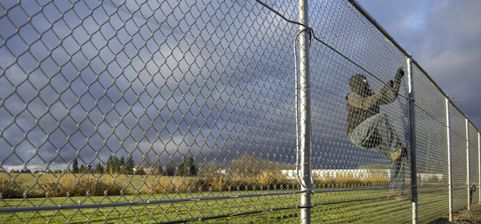
By integrating cameras with PIDS, the following operations become possible:
- Detect intrusion at an early stage along site boundaries and fence lines
- Quickly review video footage from the area where the alert was triggered
- Accelerate the initial response, including warnings, notification, and on-site action
- Build outdoor detection that does not rely solely on camera footage
Conclusion: From Adding More Cameras to Designing Detection, Verification, and Response
Adding more cameras can be an effective measure in certain situations.
However, increasing the number of cameras alone does not necessarily solve the security challenges faced at a site.
What matters is to consider the following points:
- In which areas are risks likely to occur?
- At what stage should intrusion or approach be detected?
- Who will review the camera footage, when, and how?
- After an alert is triggered, how will it lead to warning, notification, and on-site response?
- Can the system help security personnel focus on critical events without increasing unnecessary monitoring workload?
Surveillance cameras play an important role in a security system. However, to make full use of their value, it is necessary to design sensor-based detection, camera-based verification, and response procedures as one integrated process, rather than relying on video footage alone.
PVM solution and PIDS are effective approaches to support this type of design. By detecting abnormalities at an early stage, guiding operators to the necessary video footage, and enabling faster response, camera footage can be used not only as a record, but also as part of an early-response security operation.
Before adding more cameras, reviewing whether the current security operation is still centered on recording, and whether it truly supports early detection and response, is an important first step toward building a more effective security operation.
Contact OPTEX
Please feel free to contact us for further information.
We are always eager to support you and propose a solution that suits your needs.