
4 Common Blind Spots in Facility Security Systems
Security technologies such as surveillance cameras, intrusion detection systems, and access control systems continue to evolve. However, even when high-quality security equipment is installed, its full potential may not be realized due to oversights in system design or daily operations.
Security risks are not always caused by limitations in equipment performance. In many cases, security gaps arise from “blind spots” hidden within everyday procedures, operational practices, or system configurations.
In this article, we explore four commonly overlooked aspects of facility security that can have a significant impact on overall protection.
Blind Spot 1: Surveillance Camera Blind Spots
Surveillance cameras are one of the most widely used and important security technologies. However, it is not always easy to achieve complete coverage of an entire facility using cameras alone.
Unexpected blind spots can be created by factors such as:
- Building corners
- Vegetation and trees
- Parked vehicles
- Utility equipment and structures
- Lighting conditions at night
As a result, unauthorized entry or suspicious activities may occur outside the camera’s field of view.

One effective way to address these blind spots is to deploy intrusion detection sensors alongside surveillance cameras.
Furthermore, when the sensors are integrated with the camera system, the following workflow becomes possible:
- A sensor detects an intrusion.
- Related camera footage is automatically displayed.
- An operator can immediately assess the situation.
This approach allows surveillance cameras to serve not only as recording devices, but also as valuable tools for visual verification and informed decision-making during security incidents.
Blind Spot 2: Gate and Entry Point Operations
When discussing facility security, attention is often focused on physical security measures such as perimeter fences and intrusion detection systems.
However, the way gates and entry points are managed can have an equally significant impact on the overall security level of a facility, since they are the primary access routes for people and vehicles.
For example, security risks can increase when:
- Gates remain open for extended periods
- Delivery and service vehicles enter and exit frequently
- Temporary operating procedures become routine practice
- Security checks rely heavily on visual verification by guards
- Monitoring coverage becomes weaker during shift changes
Under these conditions, security systems may not perform as effectively as intended.
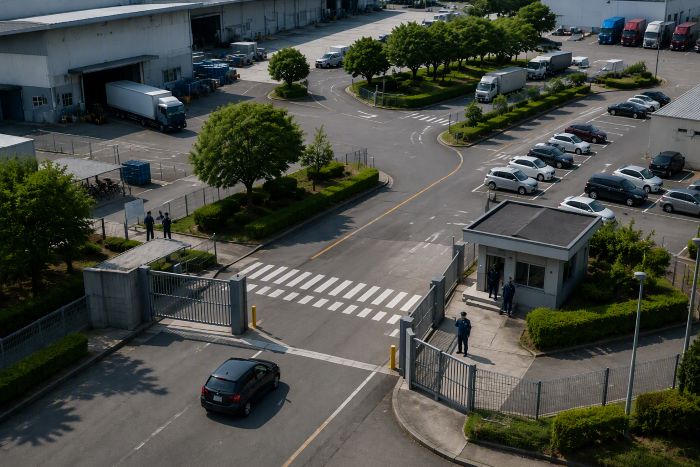
No matter how advanced an intrusion detection system may be, the expected level of security cannot be maintained if access points are not properly managed.
To address these challenges, many facilities implement measures such as:
- Automating vehicle management with license plate recognition (LPR)
- Separating traffic routes between loading areas and critical zones
- Standardizing security procedures during shift changes
- Using video surveillance and access logs around gates and entry points
The key is to design security not only around technology, but also around operational procedures.
Blind Spot 3: Tailgating at Access-Controlled Entrances
Even when an access control system is in place, there is still a risk of unauthorized entry through tailgating, where an unauthorized person enters a secure area by following an authorized individual.
For example, unauthorized access may occur when someone blends in with:
- Delivery personnel
- Cleaning staff
- Temporary visitors
- Contractors and third-party personnel
Tailgating can occur even in facilities that use card access systems or biometric authentication, making it a common security challenge across many industries.
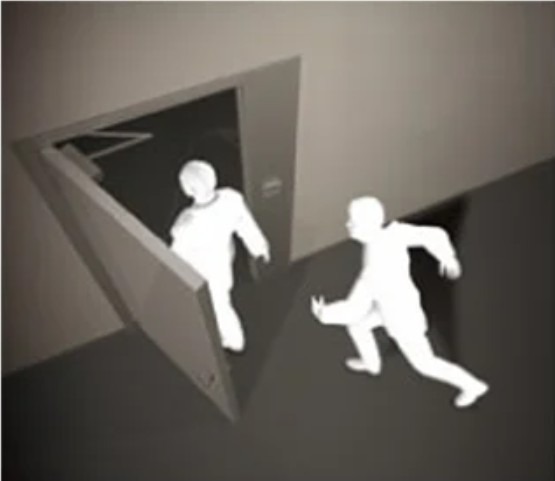
To reduce this risk, facilities often combine access control systems, surveillance cameras, and security guard procedures with specialized systems that can automatically detect tailgating incidents.
For more information about OPTEX’s tailgating detection solution, please visit the link below.
▶ OPTEX Anti-tailgating system
Blind Spot 4: Supporting Infrastructure Behind Security Systems
When evaluating an intrusion detection system, attention is often focused on factors such as:
- Detection rate
- False alarm rate
- Detection range and coverage area
- Detection technology
These are all important evaluation criteria.
However, in facility security, it is also important to consider not only the sensors themselves, but the infrastructure that supports them.
Intrusion detection systems rely on supporting components such as power supply systems, communication networks and control equipment.
Even if the sensors themselves are functioning properly, their detection capabilities may be affected if any of these upstream systems are disrupted.
When assessing the infrastructure that supports a security system, it is important to consider:
- Which systems depend on other systems
- How far the impact of a single equipment failure could spread
- Whether critical equipment is adequately protected
- Where supporting equipment is physically located
For example, if critical communication equipment or power supply systems are located outside the protected area or ahead of the detection zone, an incident affecting those assets could disable the intrusion detection system itself. The physical layout and dependencies of supporting infrastructure are often difficult to evaluate when comparing sensor specifications alone.
In facility security, it is important to consider not only how accurately a system can detect intrusions, but also whether the infrastructure supporting the detection system is properly protected.
Conclusion
Security challenges in facilities are not determined by equipment performance alone.
Overlooked factors such as:
- Surveillance camera blind spots
- Gate and entry point operations
- Tailgating
- The infrastructure supporting security systems
can have a significant impact on the overall security level of a facility.
When planning a facility security system, it is important to consider not only which technologies to deploy, but also where potential blind spots may exist and how they can be addressed through a comprehensive security strategy.
This is especially important in environments that require a high level of protection, such as data centers and critical infrastructure facilities. Identifying these blind spots at an early stage and mitigating risks through layered security measures and well-designed operational procedures can help strengthen overall security effectiveness.
Contact OPTEX
Please feel free to contact us for further information.
We are always eager to support you and propose a solution that suits your needs.