
4 Key Installation Checks to Reduce False Alarms in Photobeam Sensors
Photobeam sensors are widely used for perimeter intrusion detection at factories, warehouses, and various facilities.
Their ability to detect intrusions at an early stage and integrate with alarm systems and surveillance cameras is a major advantage in perimeter security.
However, as is common with outdoor photobeam sensor installations, they are more likely to experience false alarms or unstable detection due to environmental conditions and installation quality.
To effectively reduce false alarms, it is not enough to focus only on sensor performance. It is equally important to review key installation factors, including:
- Mounting stability
- Securing a clear beam line
- Proper optical axis alignment
- Surrounding environment, including climate conditions
In this article, we outline these four essential checkpoints to confirm during installation in order to reduce false alarms.
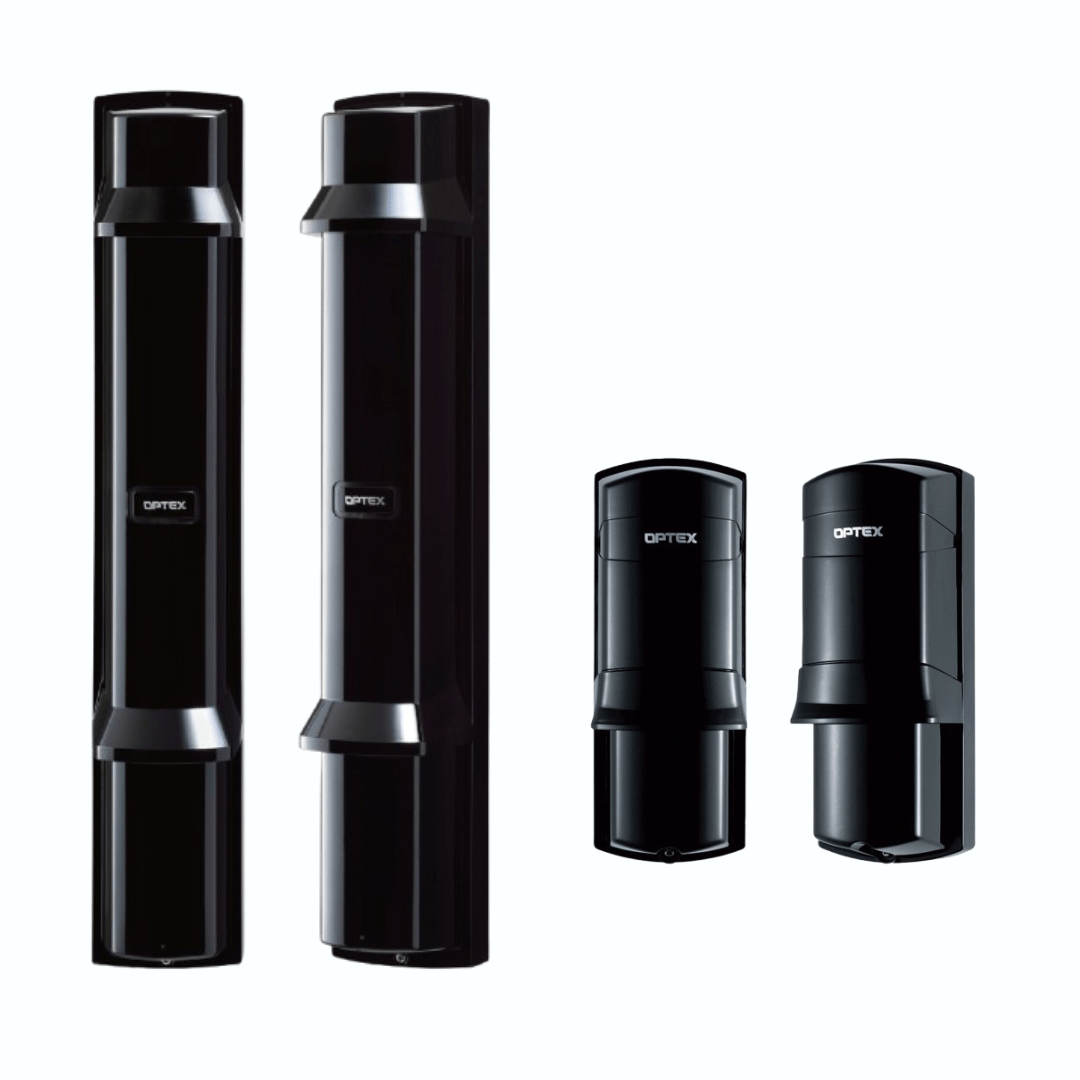
OPTEX’s Smart Line series is also equipped with multiple features designed to help reduce both false alarms and missed detections caused by these factors.
Why False Alarms Cause Problems
False alarms from photobeam sensors are not just a matter of an alarm sounding and ending there.
Each false alarm increases the need for on-site checks and CCTV footage reviews, placing an additional burden on security staff and operators.
When false alarms continue to occur, confidence in the alarm system declines. This can also affect the initial response to alarms that truly require attention.
As false alarms persist, the following operational burdens tend to increase on site:
- On-site inspections and video verification are required every time an alarm is triggered
- Security staff find it more difficult to judge alarm priority
- Sensitivity settings and installation conditions need repeated review, increasing maintenance workload
- Overall trust in the security system declines
For this reason, with photobeam sensors, it is essential not only to achieve reliable detection performance, but also to suppress unnecessary alarms and maintain stable, long-term operation.

Point 1: Install the Sensor on a Structurally Stable Mounting Surface
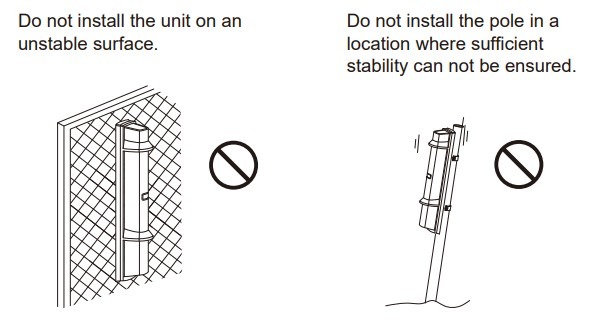
In perimeter security applications, especially for long-distance beam detection, even slight movement or vibration of the sensor can affect signal reception.
If the pole, mounting structure, or ground foundation is unstable, factors such as wind, passing vehicles, or the movement of gates and shutters can cause misalignment of the optical axis, leading to false alarms or unstable detection.
This is especially common when sensors are mounted on poles installed in soft soil or on insufficient foundations. Over time, ground conditions or repeated vibration may cause gradual misalignment.
For stable and reliable operation, it is essential to ensure that the sensor is firmly installed on a structurally stable surface with adequate rigidity.
Checkpoints
- Does the pole, wall, or mounting structure have sufficient strength and rigidity?
- Is the ground or foundation stable, or could it shift due to soft soil or weather conditions?
- Can vibration from gates, shutters, or other moving equipment be transmitted to the sensor?
- For long-distance installations, is the mounting method sufficiently robust rather than temporary or overly simple?
Point 2: Ensure a Clear Beam Path
Photobeam sensors rely on a stable and unobstructed beam path between the transmitter and receiver.
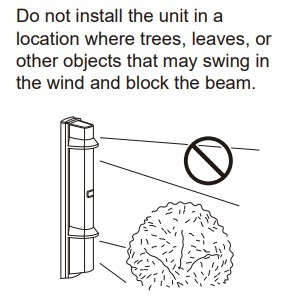
If objects such as tree branches, signs, or temporary structures enter the beam line, they can become a source of false alarms.
Even if no issues are present at the time of installation, the surrounding environment may change over time. Tree branches may grow, layouts may be modified, or vegetation may sway in the wind and temporarily interfere with the beam. For outdoor installations, it is important to determine the sensor position with potential environmental changes in mind, including plant growth and future site modifications.
In addition to physical objects, animals such as birds or cats crossing the beam can also trigger false alarms.
Checkpoints
- Could branches, leaves, or weeds grow into the beam line over time?
- Is there a possibility that signs or temporary structures could be installed later?
- Is the area prone to birds perching, animals crossing, or fallen leaves accumulating?
Features of OPTEX Smart Line Series
The OPTEX Smart Line series includes quad-beam photobeam sensors, which use four infrared beams.
Compared with twin-beam models, quad-beam sensors are more effective in reducing false alarms caused by birds or fallen leaves. An alarm is triggered only when all four beams are blocked simultaneously, making the system less sensitive to partial or momentary obstructions and more suitable for outdoor environments.
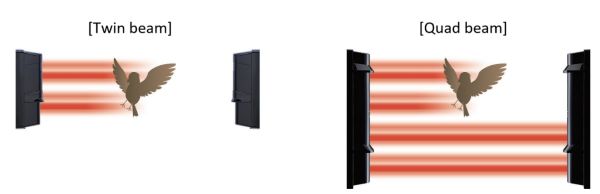
However, even with these advanced features, stable operation is difficult if the beam path is easily obstructed.
Ensuring a clear and unobstructed beam line is the fundamental requirement for reliable photobeam sensor performance.
Point 3: Do Not Settle for Approximate Optical Alignment
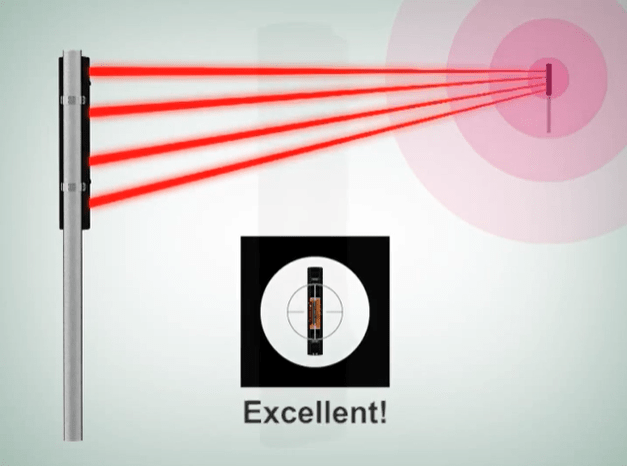
From the perspective of reducing false alarms, proper optical alignment is especially critical.
If the optical axis is not accurately aligned, even minor vibration or environmental changes such as rain or fog can cause unstable signal reception and lead to unnecessary alarms.
For this reason, during installation, it is not sufficient to simply adjust the sensor direction by eye. It is important to confirm that stable signal reception is achieved under actual operating conditions.
In addition, alignment checks should not end immediately after installation. Reconfirming alignment during walk tests and again before system handover can significantly reduce trouble after the system goes into operation.
Checkpoints
- Is alignment being verified beyond visual adjustment alone?
- Is signal reception confirmed during testing and commissioning?
- Is there a procedure to recheck alignment before handover to customers?
Features of OPTEX Smart Line Series
The OPTEX Smart Line series includes features designed to support accurate beam alignment, even in long-distance installations.
Selecting sensors that are easier to align can itself contribute to reducing false alarms.
Key Alignment Support Functions
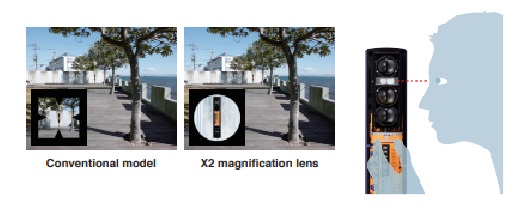
1. Sniper Viewfinder
Provides 2× magnified viewing, making optical alignment easier at long distances.
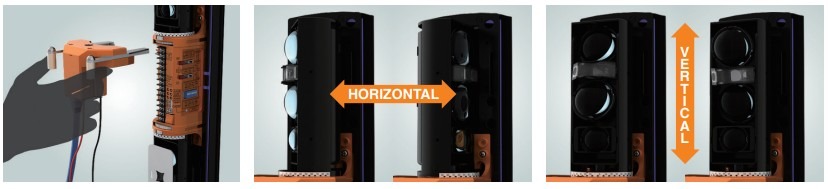
2. Beam Alignment Unit (BAU-4)
Supports an optional automatic alignment tool, helping achieve accurate and efficient optical alignment.
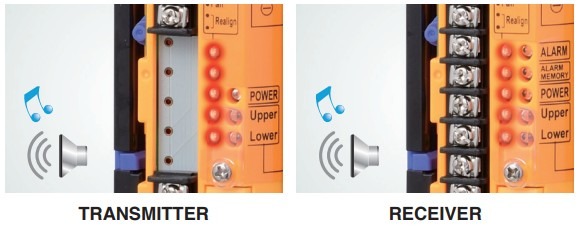
3. LED Indicator and Sound Assist (SL-QDM / SL-QDP only)
Allows installers to visually and audibly confirm alignment levels.
SL-QDM: Both Transmitter & Receiver / SL-QDP: Receiver only
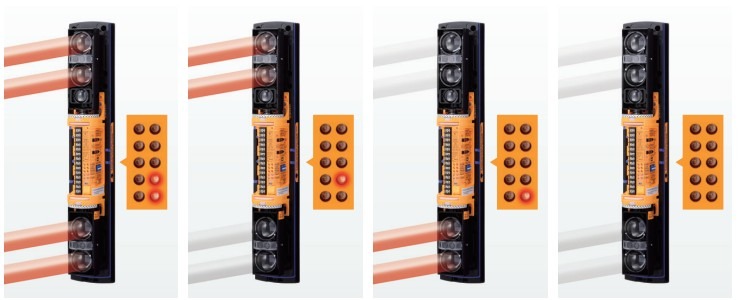
4. Upper / Lower Beam Selection Button (SL-QDM / SL-QDP only)
Allows optical alignment without a beam blocking plate by alternately turning the upper and lower beams on/off in Installation Mode.
Point 4: Select and Install Sensors with Environmental Conditions in Mind
In outdoor installations, various external factors—such as rain, fog, sunlight, reflections, and the movement of people or vehicles—can affect detection stability.
In Southeast Asia in particular, high temperature and humidity are common, and heavy rain or dense fog may occur depending on the region and season. For this reason, sensor selection and installation positions should not be determined based on drawings alone. It is essential to take into account the actual site conditions and local climate when planning the system.
Checkpoints
- Do surrounding environmental conditions change significantly throughout the year?
- Is the location exposed to direct sunlight or strong reflected light?
- Is the site prone to heavy rain, fog, or dust?
- Do pedestrian or vehicle traffic patterns differ between daytime and nighttime?
Features of OPTEX Smart Line Series
The OPTEX Smart Line series is equipped with features designed to support stable operation in outdoor environments.
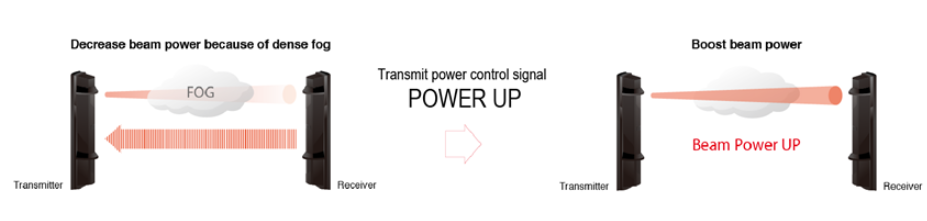
1. A.T.P.C. (SL-QDM only)
Automatically controls and optimizes beam power to maintain stable performance, helping reduce false alarms and missed detections caused by fog, frost, crosstalk, and signal saturation.
2. Sunshine Protection Technology (SL-QDM / SL-QDP only)
Reduces the impact of strong sunlight and external light interference, supporting stable outdoor detection.
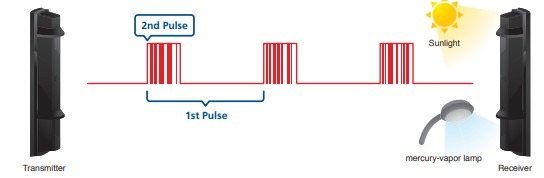
3. Double Modulation Beam (SL-QDM / SL-QDP only)
The double modulation beams that differ in pulse patterns can enhance signal discrimination against potential noise interference such as sunlight or other external light sources.
4. D.Q. Circuit (SL-QDM / SL-QDP only)
Outputs a trouble signal when detection performance degrades due to environmental factors such as fog or heavy rain.
Summary
Reducing false alarms with photobeam sensors requires more than selecting the right sensor model. It is essential to carefully evaluate the installation environment and ensure high installation quality.
In particular, the following four points should always be confirmed as basic requirements:
- Is the sensor installed on a stable and rigid mounting surface?
- Is the beam path kept clear of potential obstructions?
- Is optical alignment performed accurately and kept stable?
- Have surrounding environmental and climate conditions been fully considered?
By addressing these fundamentals, more stable and reliable operation can be achieved in outdoor perimeter security applications.
At the same time, while reducing false alarms is critical, preventing missed detections is an equally important aspect of perimeter security system design and operation.
Measures to address missed detections will be discussed in a separate article.
For more information on the basic operating principles of photobeam sensors, model selection, and how to evaluate different environmental conditions, please refer to the related article below.
A Comprehensive Guide to Photobeam Sensors for Perimeter Security
For more information about OPTEX PIDS solution, please refer to the article below.
PIDS – Perimeter Intrusion Detection System
Contact OPTEX
Please feel free to contact us for further information.
We are always eager to support you and propose a solution that suits your needs.